- The Hesitation at the Door
- Tourist Bars vs. Local BarsEntertainment or Sanctuary?
- Why Are Japanese Bars So Quiet?The Aesthetics of Shared “Margin”.
- The Truth About “No First-Timers”.A Culture of Trust, Not Exclusion
- Understanding “Otoshi”.The Hospitality Hidden in the Table Charge
- The Role of the Master.The Conductor of the Night.
- YOLO DISCOVER’s Approach:Blending into the Night Routine
- Handy Japanese for Your Local Bar Visit
- 【Q&A】Common Questions About Local Bars in Japan
- Key Takeaways from This Article
The Hesitation at the Door
You stand in a narrow alleyway, perhaps in a weathered building or a renovated old house. In the corner, a solid wooden door stands silent, offering no glimpse of the interior.
Everyone feels it at least once:
“Will I be welcome if I open this door?”
“Is it filled with regulars? Will I feel out of place?”
“There are no English menus or signs for tourists…”
If you feel this hesitation, it’s not because you’re an outsider. It’s because that bar is a cherished part of the everyday life for people living there, not an attraction.
A local bar in Japan is more than just a place to drink; it’s a sanctuary where residents return to their true selves at the end of the day. Let’s unlock the sophisticated etiquette hidden behind that silent door.
Tourist Bars vs. Local BarsEntertainment or Sanctuary?
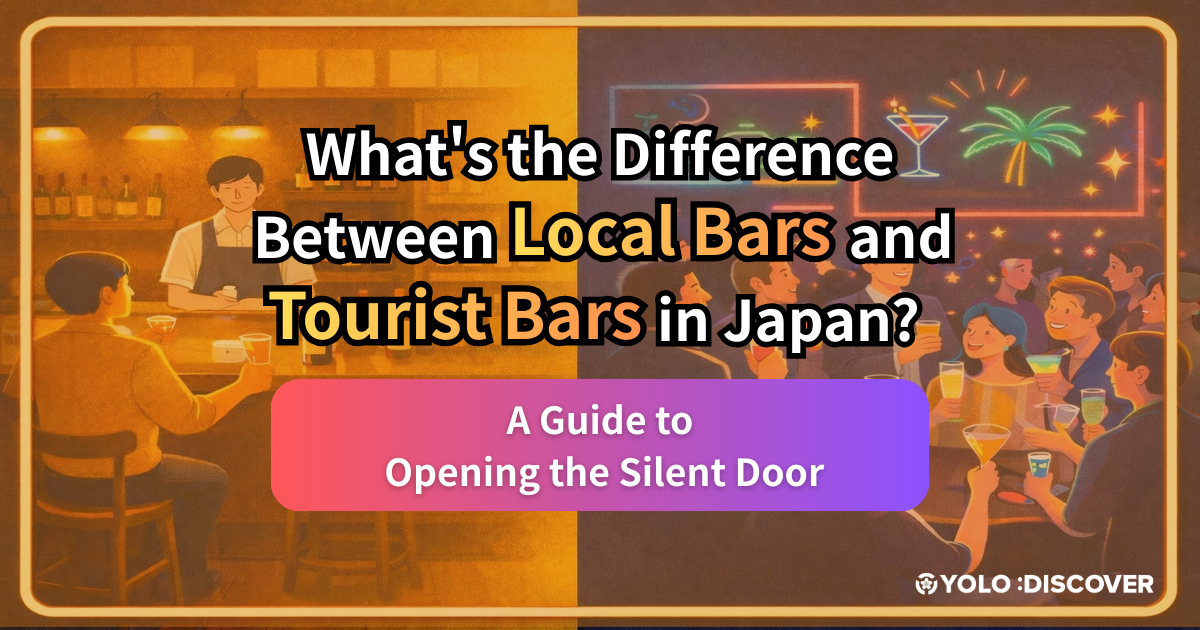
While they both fall under the label of bar, tourist-oriented spots and local bars serve entirely different purposes.
Tourist-oriented Bars
Purpose: Entertainment and creating an extraordinary experience.
Design: Clear photo menus, straightforward pricing, and English-speaking staff. They are built specifically for first-time visitors.
Service: High-energy hospitality where staff actively engage with guests to create a lively mood.
Local Bars
Purpose: Providing a stable daily routine and a sense of private peace.
Design: Minimal signage and modest interiors. The priority is ensuring regulars can relax in their usual seats.
Service: Subtle yet warm. The perfect distance —neither too close nor too far— is considered the highest form of hospitality.
It’s not a matter of which is better; it’s about whether you are seeking stimulation or serenity.
Why Are Japanese Bars So Quiet?The Aesthetics of Shared “Margin”.
Upon entering a local bar, the quietude might surprise you. Loud music and boisterous laughter are generally frowned upon here.
Awareness of Shared Space
In Japanese bar culture, respecting the person next to you is as important as enjoying yourself.
Tone of Voice
Even among friends, it is common to speak in hushed tones. This is a gesture of consideration to preserve the atmosphere for everyone present.
The Beauty of Silence
The Master (owner) constantly measures the distance between guests. Silence is not an absence of communication; it’s a comfortable part of it.
The Truth About “No First-Timers”.A Culture of Trust, Not Exclusion
For those feeling unsure, even if it’s your first time.
At YOLO DISCOVER, you can check
all participation requirements and important notes beforehand.

The phrase Ichigensan-okotowari(No first-time guests without an introduction) often makes Japanese bars seem mysterious or exclusionary. However, the modern meaning has evolved.
It’s Not About Being New
Most bars today welcome newcomers. The rule is actually an unspoken agreement: “You are welcome if you respect our atmosphere.”
A Foundation of Trust
Local bars survive on long-term relationships of trust between the Master and the regulars.
Your Behavior is Your Resume
When you enter as a first-timer, the Master isn’t judging your nationality or background. They are observing whether you can enjoy the space without disrupting the harmony. A quiet guest who savors their drink with respect is never unwelcome.
Understanding “Otoshi”.The Hospitality Hidden in the Table Charge
In Japanese bars and Izakaya, there is a unique custom called “Otoshi”—a small appetizer served before you even order, accompanied by a fee.
Practical Table Charge
Most local bars charge between 500 to 1,000 yen as a seating fee. The “Otoshi” is provided in exchange for this charge.
A Greeting from the Host
It serves as a gesture of thanks: “Thank you for choosing our shop tonight.”
A Sign of Quality
It is said that the quality of the Otoshi reflects the Master’s skill and dedication. Rather than seeing it as a mandatory fee, consider it an “admission ticket” to the world of Japanese night culture.
The Role of the Master.The Conductor of the Night.
In a local bar, the real star is often the Master (the owner/bartender) rather than the alcohol itself.
The Atmospheric Tuner
The Master does more than just make drinks. They are the conductors of the evening, ensuring guests maintain the right distance, bridging conversations when necessary, and gently calming the room if it becomes too loud.
The Neighborhood Concierge
A seasoned Master is a treasure trove of local history, hidden culinary gems, and neighborhood stories.
Building Trust
Start by asking the Master for a recommendation (Osusume). That is where your genuine relationship with the bar—and the city—begins.
YOLO DISCOVER’s Approach:Blending into the Night Routine
YOLO DISCOVER’s local bar experiences are not mere pub crawls. Our goal is for you to feel the quiet rhythm of the Japanese night as a temporary member of the neighborhood.
Unstaged Authenticity
We select places where real Japanese night life happens—places without tourist staging.
Discovery Through Understanding
By knowing the unwritten rules beforehand, you can turn your anxiety into excitement.
Understanding as the Experience
We believe the real discovery isn’t the type of whiskey you drink, but the realization of how people in Japan heal and reset their hearts at the end of the day.
Experience local bar culture firsthand.
Discover authentic bars used daily, not just for tourists.
>> See all local bar experiences
Handy Japanese for Your Local Bar Visit
Understanding the culture is the first step; the next is carrying a few essential words with you. You don’t need to be fluent to be welcomed. In the intimate world of local bars, your effort to speak even a little Japanese is seen as a sign of respect and curiosity. It’s the ultimate key to bridging the gap between you, the Master, and the regulars.
1. Entering the Bar: A Warm Start
A local bar is often like the Master’s own living room. Start with a polite greeting to set the right tone.
| Japanese | Romaji | Meaning |
| こんばんは | Konbanwa | Good evening |
| 一人ですが、入れますか? | Hitori desu ga, hairemasu ka? | It’s just me, can I come in? |
| ここ、空いていますか? | Koko, aite-masu ka? | Is this seat available? |
Pro-Tip:In bars where the interior is hidden, simply opening the door slightly, saying “Hitori desu” (I’m alone), and holding up one finger is a universally understood and polite way to ask for a seat.
2. Ordering: Trusting the Master
If there’s no menu or you’re feeling adventurous, let the Master guide your palate.
| Japanese | Romaji | Meaning |
| おすすめはありますか? | Osusume wa arimasu ka? | Do you have any recommendations? |
| これと同じものをください | Kore to onaji mono wo kudasai | I’ll have the same as this (pointing) |
| おまかせでお願いします | Omakase de onegai-shimasu | I’ll leave it up to you |
Pro-Tip:Using the word “Omakase” tells the Master that you trust their craft and taste. It is one of the highest compliments you can give in Japanese food and drink culture.
3. During the Stay: Connecting with the Vibe
You don’t need to force a conversation, but these phrases can help you share the moment.
| Japanese | Romaji | Meaning |
| (お酒が)美味しいです | Oishii desu | This is delicious |
| 写真、撮ってもいいですか? | Shashin, totte mo ii desu ka? | May I take a photo? |
| 静かで良いお店ですね | Shizuka de yoi omise desu ne | This is a lovely, quiet place |
Pro-Tip:In Japanese bars, Quiet (Shizuka) is a major compliment. Expressing your appreciation for the peaceful atmosphere tells the Master that you truly “get” their bar’s philosophy.
4. Leaving: A Lasting Impression
Finish your night with grace and gratitude.
| Japanese | Romaji | Meaning |
| お会計をお願いします | Okaikei wo onegai-shimasu | Check, please |
| ごちそうさまでした | Gochisousama-deshita | Thank you for the drink/meal |
| また来ます | Mata kimasu | I’ll be back |
Pro-Tip:Saying “Mata kimasu” (I’ll be back) is the best gift you can leave behind. Even if you might not return soon, it leaves a warm, lingering feeling of a successful connection.
【Q&A】Common Questions About Local Bars in Japan
Q: Is it okay to go to a local bar if I’m not a heavy drinker?
A: Absolutely. Most bars offer high-quality non-alcoholic cocktails or soft drinks. The focus is on enjoying the atmosphere, not the amount of alcohol consumed.
Q: Can I take photos of the interior with my phone?
A: Taking a quick photo of your drink is usually fine, but always ask the Master first. Be careful not to include other guests in the frame, and turn off the flash and shutter sound.
Q: What if the menu doesn’t have prices listed?
A: Traditional authentic bars sometimes don’t list prices. If you’re on a budget, it’s perfectly fine to say: “Can you make me a drink for around 1,500 yen?”
Q: Should I leave a tip?
A: Tipping is not customary in Japan. The “Otoshi” (table charge) serves that purpose. A simple “Gochisosama” (Thank you for the drink) with a smile as you leave is the best way to show your appreciation.
Discover a neighborhood sanctuary that doesn’t appear in the tourist guides. Detailed menus and essential etiquette for each experience are available after registration.
>>Sign up to explore local bar experiences
Key Takeaways from This Article
- Shared Sanctuary: Local bars are spaces for enjoying silent proximity—being together while respecting personal space.
- Steps to Trust: Newcomers (Ichigensan) are welcome as long as they respect the established atmosphere.
- Charge and Otoshi: The mandatory appetizer (Otoshi) is both a greeting from the host and a symbolic admission fee.
- Trust the Master: Using phrases like “Osusume” (Recommendation) or “Omakase” (I’ll leave it to you) builds instant rapport.